Mediation and reconciliation between farmers, pastoralists and neighbouring communities over land, water and resources.
Farmer–pastoralist conflict is rarely about a single incident. It is about grazing corridors, water points, crop damage and years of unaddressed grievance between groups who must nonetheless share the same landscape.
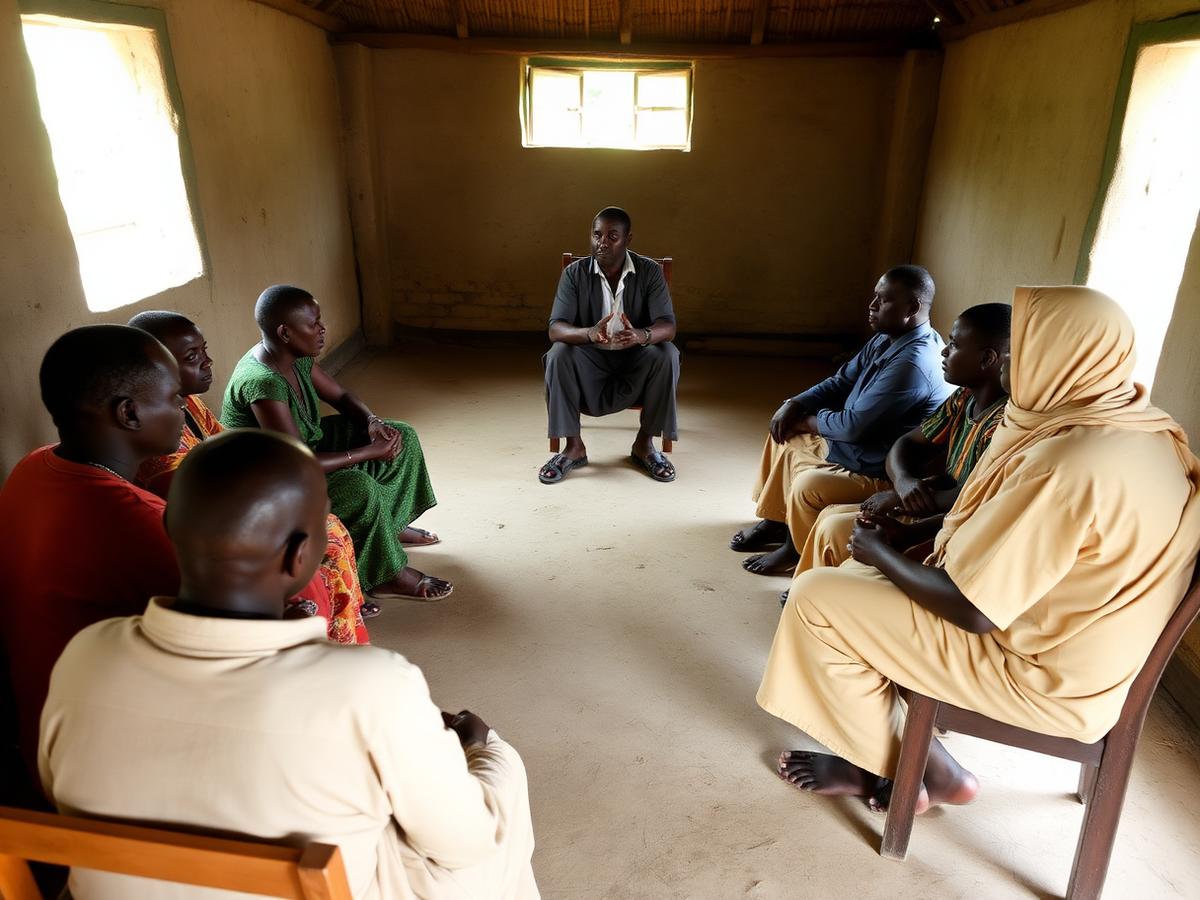
Our conflict transformation work moves beyond settling the immediate case. Mediation produces written, jointly owned agreements on how land and water will be shared, endorsed by both communities and by local authorities.
The Challenge
Competition between farmers, pastoralists and neighbouring communities over land and water is a recurring driver of conflict.
Our Response
We bring disputing parties together through structured mediation that addresses root causes, not just symptoms.
Who benefits
Farming and pastoralist communities in resource-contested districts.
Where we work
Kagera · Tabora · Mbeya
How We Work
Our approach, step by step
1
Map the dispute
We document histories, claims and seasonal pressures with both parties separately.
2
Mediate
Neutral facilitation brings representatives together to negotiate practical terms.
3
Formalise
Resource-sharing agreements are written, signed and registered with local government.
4
Reconcile
Traditional reconciliation processes restore relationships, not just rules.
Key Activities
What this looks like in practice
Facilitated mediation between farmer and pastoralist groups
Joint resource-sharing agreements
Reconciliation ceremonies that restore trust
Expected outcomes
Durable resource-sharing agreements and reduced repeat conflict.
Districts reached
0+
Community initiatives supported
0+
Strategic partnerships
0+
Voices From The Field
“The mediation process helped our two villages find a way to share the river that had divided us for a decade.”
Mzee Rajabu, community elder, Kagera
Who We Work With
Delivered in partnership
Ward tribunals
Pastoralist associations
Farmer cooperatives
Support the conflict transformation programme
Partner with us, fund a district, or bring your technical expertise to communities already leading this work.